
St. Andrews City Directory Shelves
St. Andrews is a Census-designated place, not an incorporated city with its own historical directory office. Its strongest historical directory trail sits in Columbia and Richland County collections. Search the place names St. Andrews, Saint Andrews, St Andrews, Columbia, and Richland County, plus the exact street form. A Columbia hit is a dated lead, not evidence that every modern CDP address appeared in that volume. The University of South Carolina collection supplies free searchable scans, while Richland Library's Walker Local and Family History Center keeps later reference volumes at Main/Downtown.
| Collection | Years | Where held | Access |
|---|---|---|---|
| USC Columbia directory collection | 1859-1927, non-annual | University of South Carolina digital collection | Free searchable whole-volume scans |
| Hill's Columbia directory | 1929-1979, cataloged gaps | Richland Library Main/Downtown | In-library reference volumes |
| R. L. Polk Columbia directory | 1985-1997, cataloged gaps | Richland Library Main/Downtown | In-library reference volumes |
| Greater Columbia City and Suburban Directory | 1918 | Walker Center local-history shelf | Physical reference holding |
| Columbia telephone directories | 1924, 1935, 1942, 1954 located | Richland Library digital collections | Dated address and telephone leads |
The runs are not seamless. The digitized collection spans 1859 to 1927 but is not annual. The Hill catalog lists held volumes for 1929-1932, 1934-1943, 1945-1964, 1966-1973, and 1978-1979. The Polk shelf lists 1985-1988 and 1990-1997. Mark a missing year as a gap instead of filling it with an assumption.
St. Andrews Under Columbia Titles
Three labels can be right for the same historical question: St. Andrews for the CDP, Columbia for a mailing city or directory title, and Richland County for the public custodian. That geography explains why the useful historical shelf is titled Columbia. The Hill catalog's edition notes also reach beyond the city proper to communities such as Arcadia, Belvedere, and Capitol View. That breadth is a reason to test a St. Andrews-area address in the larger run, not a promise of coverage in every edition.
Keep every spelling in a research note. County property tools show a sample address as Saint Andrews Road, Census material uses St. Andrews, and older sources may omit the period. An address may also be filed as Columbia. Preserving those aliases avoids losing a catalog result simply because its label does not match a current map.
Note: A directory title and a postal label are geographic clues, not municipal-boundary proof for a particular parcel.
Walker Center St. Andrews Research
The Walker Local and Family History Center is the local-history desk for this work because its stated collecting scope includes Columbia, Richland County, and the county's CDPs and unincorporated areas. It is at 1431 Assembly Street in Columbia, on the first level. Walk-ins are welcome, appointments can be made for local-history or genealogy help, and the library offers a remote obituary-request route. Published standard hours are Monday through Friday, 9 a.m. to 6 p.m., Saturday, 2 p.m. to 6 p.m., and Sunday closed. Check for holiday changes before a visit.
The Walker Center names Columbia directories, genealogy databases, FamilySearch Affiliate access, local newspapers and magazines, the Local History & Obituary Index, maps, and Columbia-area school yearbooks among its research tools. The digital collections add photographs, oral histories, local books and pamphlets, and map material. A St. Andrews Branch visit can start a catalog search, but the downtown Walker Center is the verified archival route.
See the Walker Center's collection and service page before visiting.
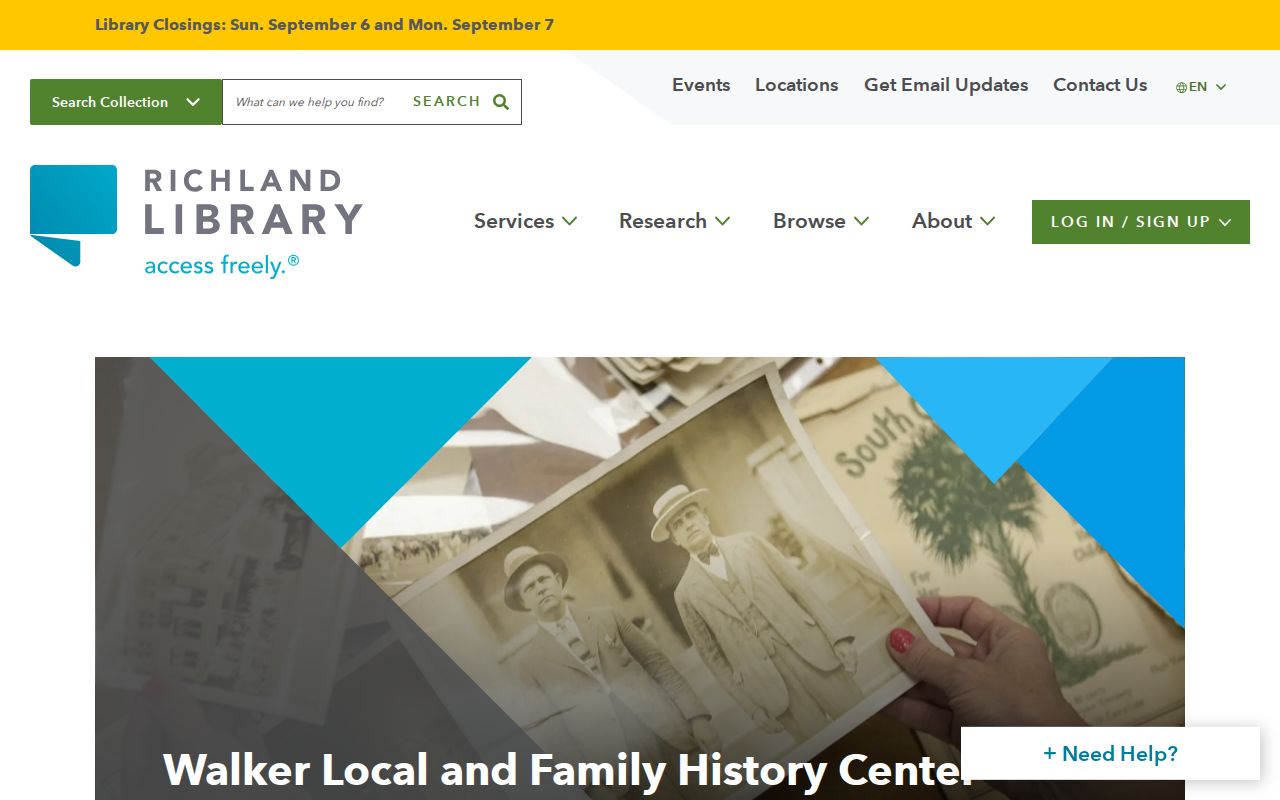
The page confirms the library channel that connects a St. Andrews search to Columbia and Richland County historical materials.
St. Andrews Directory Years and Gaps
Publisher names and dates matter. The USC collection includes 1859, 1860, 1868, 1875-1876, 1879-1880, 1888, 1891, 1895, 1897-1898, and a range of later volumes. Its metadata attributes different editions to J. T. Hershman and R. W. Gibbes, Julian A. Selby, R. L. Polk, Walsh, Maloney, Beasley and Emerson, Charles Emerson, and C. M. Douglas. The 1912 item has a metadata conflict between a Maloney attribution and an older bibliography, so the individual record should be cited rather than flattened into a single publisher story.
A Hill's Columbia directory catalog record shows its actual retained volumes and their in-library status. The later Polk catalog record identifies another discrete, gap-filled run. These dates make a practical timeline:
- 1859-1927: USC provides a non-annual digital collection of Columbia volumes.
- 1918: the Greater Columbia City and Suburban Directory is a separate Walker Center holding.
- 1929-1979: Hill's volumes continue at the library, with the retained-year gaps noted in the catalog.
- 1985-1997: Polk volumes supply another later, incomplete shelf.
Use the Hill catalog to confirm whether the exact year exists before making the trip.
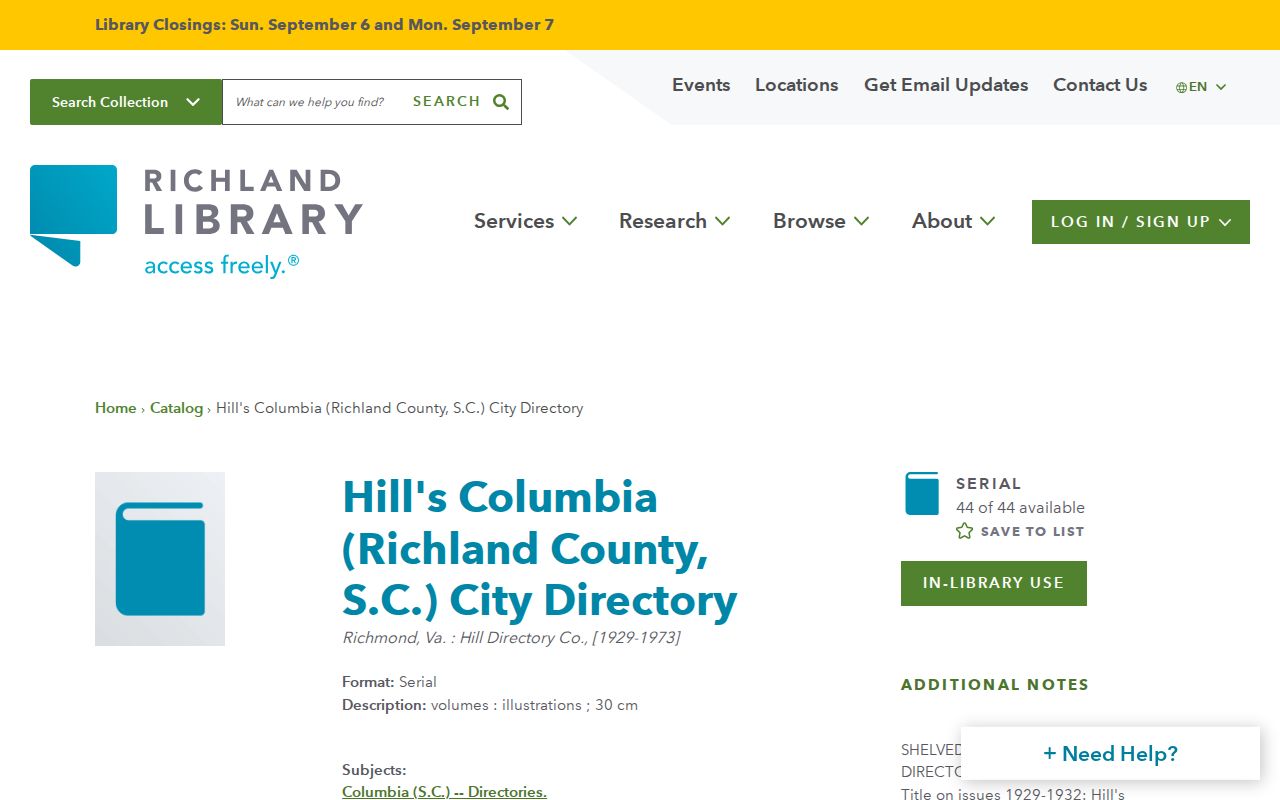
The catalog view makes the gaps visible, which prevents a missing entry from being treated as a conclusive absence.
Note: A cataloged date confirms a held volume, not that the volume includes every address in the modern CDP.
Decode St. Andrews Directory Entries
The 1907-08 Columbia volume offers a clear example of how an entry should be read. A name section can show a surname, given name or initial, a spouse in parentheses, an occupation, an employer or workplace, a business address, a residence, and relationship or status notation. Those are publisher conventions. They are not official record fields, and they should stay tied to the printed year. A historic work description can help separate two similar names, but it does not establish a present address or current status.
| Personal name | Surname and given name or initials, sometimes with a spouse in parentheses. |
|---|---|
| Work notation | Occupation, employer, business address, or another printed work description when supplied. |
| Residence | Address shown by the publisher. In the sample, r means residence and same carries forward the preceding location. |
| Status clue | Relationship or widow notation may appear, but it remains a dated directory claim. |
| Street department | Reverse-order entries can list heads of houses and may mark businesses with an asterisk. |
- Criss-cross directory
- A reverse-address section arranged by street and number, used to move from a historic address to a listed head of house.
- Householder index
- A name or address arrangement that identifies the household contact selected by the publisher, not every person at the address.
- Abbreviation key
- The printed legend defining terms such as agt, bkkpr, clk, wid, and r. Save it with the entry image.
The digitized 1907-08 Columbia directory includes both an abbreviation key and a Street and Avenue Department. Its source-era departmental labels should be described as historical source language, never repeated as present-day categories.
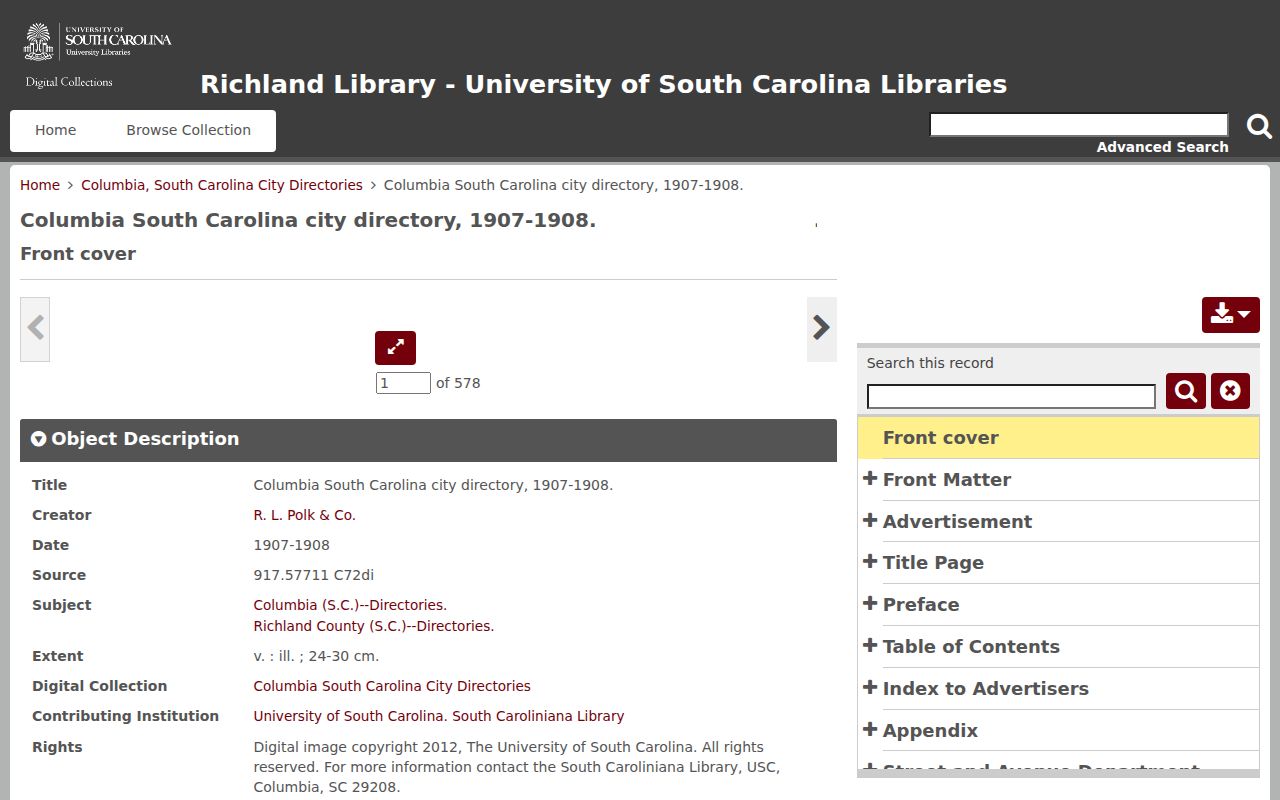
The digitized volume is a model for recording the page, year, spelling, and printed notation alongside a family-history lead.
St. Andrews Directory Streets
When a volume has a Street and Avenue Department, start with the historical street form and number. In the 1907-08 volume, streets are alphabetized, numbering is described as running south to north and east to west, and the volume says there are 100 numbers per block. Even and odd sides are also stated. Those conventions belong to that edition. Check an old map before carrying the address onto a modern street grid.
A reverse section is especially helpful when a surname is unknown. Record the exact printed street spelling, the number, the listed person, the page, the year, and any vacant, business, or same notation. Then turn to the name section for the companion entry. For a current parcel or modern street record, use the Street Directory rather than extending a dated listing beyond its year.
Note: Reverse-address listings identify the publisher's listed head of house for that edition, not a full household roster.
Tracing St. Andrews City Directories
Use a city directory as one dated stop in a household trail. First, locate the person or historical address in an available volume. Preserve the page number and the directory's spelling. Next, compare nearby surviving editions while explicitly noting a missing volume. Pair the result with the nearest released federal census, then test the date against a deed, telephone directory, obituary citation, probate file, or map. The most recent released population schedules are governed by the 72-year rule, so a census is historic context, not a current list.
- Find the first available listing by name or street, then save the year and page.
- Read the companion name or street section for the additional printed fields.
- Compare the next surviving directory, writing down each gap instead of inferring continuity.
- Match the directory date to the nearest released census and a dated property or probate record.
- Use the library obituary index or newspapers to locate a citation for a later family event.
A non-listing can mean a move, a variant name, a missing volume, a vacant lot, or the publisher's own scope rule. It should prompt another source, not a conclusion.
Note: Record the exact edition and page because a directory entry is useful only when its publication date travels with it.
St. Andrews Directory Companion Sources
The Local History & Obituary Index supplies citations to obituaries, death notices, local articles, and photographs. It is an index, not necessarily a scan. Richland Library asks researchers to check the index first and permits up to three obituary requests per week. Its request form asks for a full name, a death date or range, residence, and an email address. Yearbooks, oral histories, local books, newspaper photographs, and maps can add context when their volume, publication, or creation date is retained.
For older government and county materials, the South Carolina Department of Archives and History is the statewide fallback after the local library and current Richland custodian. Its resources include selected county deeds on microfilm through 1920, historic record guides, and research-room materials. The state route can clarify a historical record trail, but it does not turn a directory lead into proof of present residence.
Open the South Carolina Historical Society research entry point to search its catalog and finding aids for additional regional context.
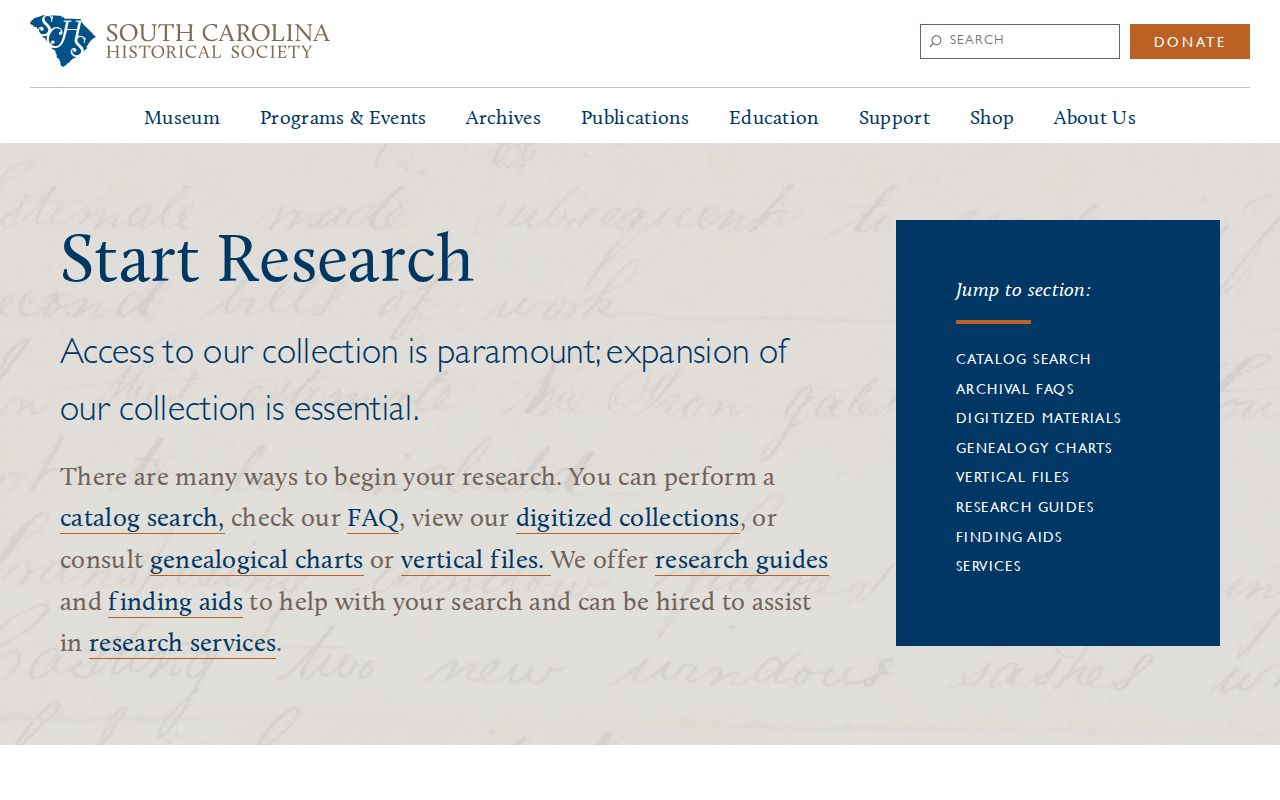
The historical society is a supplemental research channel, while Walker and USC remain the identified directory collection routes.
St. Andrews Directory Limits
Historic directories, telephone books, maps, and index citations are selective publications. They do not prove continuous residence, ownership, household membership, or a current location. Coverage can change by year, and a modern St. Andrews address may fall outside an older Columbia edition's reach. No public St. Andrews-specific cemetery database was verified, and the USC interface's detailed search limits were not independently confirmed. Use the library, a printed volume, or a research appointment when a digital search produces no result.
Family-history use. A dated directory entry can help explain a family or property history, but it should never be used to track, harass, or harm a living person.