
St. Andrews Resident Lookup Records
One-person research is strongest when each record is used for the question it can actually answer. A Richland property result can show an owner of record, a parcel, and a tax mailing address where listed. It cannot establish everyone at an address. A court index can identify a public case and party role. A vital-record channel may confirm a documented event only when the requester meets its rules. The local geography matters as well: a result can use St. Andrews, Columbia, a ZIP mailing city, or Richland County as its place label.
| Record channel | What it can confirm | Custodian | Access boundary |
|---|---|---|---|
| Assessor property roll | Owner of record, situs, tax-map number, and tax context | Richland County Assessor | Public property information; owner is not automatically current resident. |
| Court public index | Public case number, party role, type, dates, and status | South Carolina Judicial Branch | File access and sealed-case limits remain with the court. |
| Probate estate inquiry | Estate case and possible personal-representative trail | Richland Probate Court | Use public filings and court instructions; not a current-address record. |
| State vital records | Documented birth, death, marriage, or divorce event | South Carolina DPH | Eligibility, identity, date, and statutory closure rules apply. |
| Business or license record | Named affiliation or a displayed license status | SOS or LLR | Registered offices and licenses are not personal-location proof. |
Start with the most dated and specific fact already known, such as a name variation, parcel, court case number, estate number, or event date. Then seek a second record from a different custodian rather than repeating a single index result.
St. Andrews Court Record Search
The South Carolina Judicial Branch Public Index offers Richland County as a selected county search. It supports an optional case number or name, then filters for action type, date type and range, tax map number, court type or agency, case type or subtype, and party role. Begin with one or two criteria. The Judicial Branch guide recommends narrowing from there. A name match must be read with the party role, court, case type, filing or disposition date, and status before it is linked to another record.
The Richland County Public Index is the official online entry point for this court-record channel.
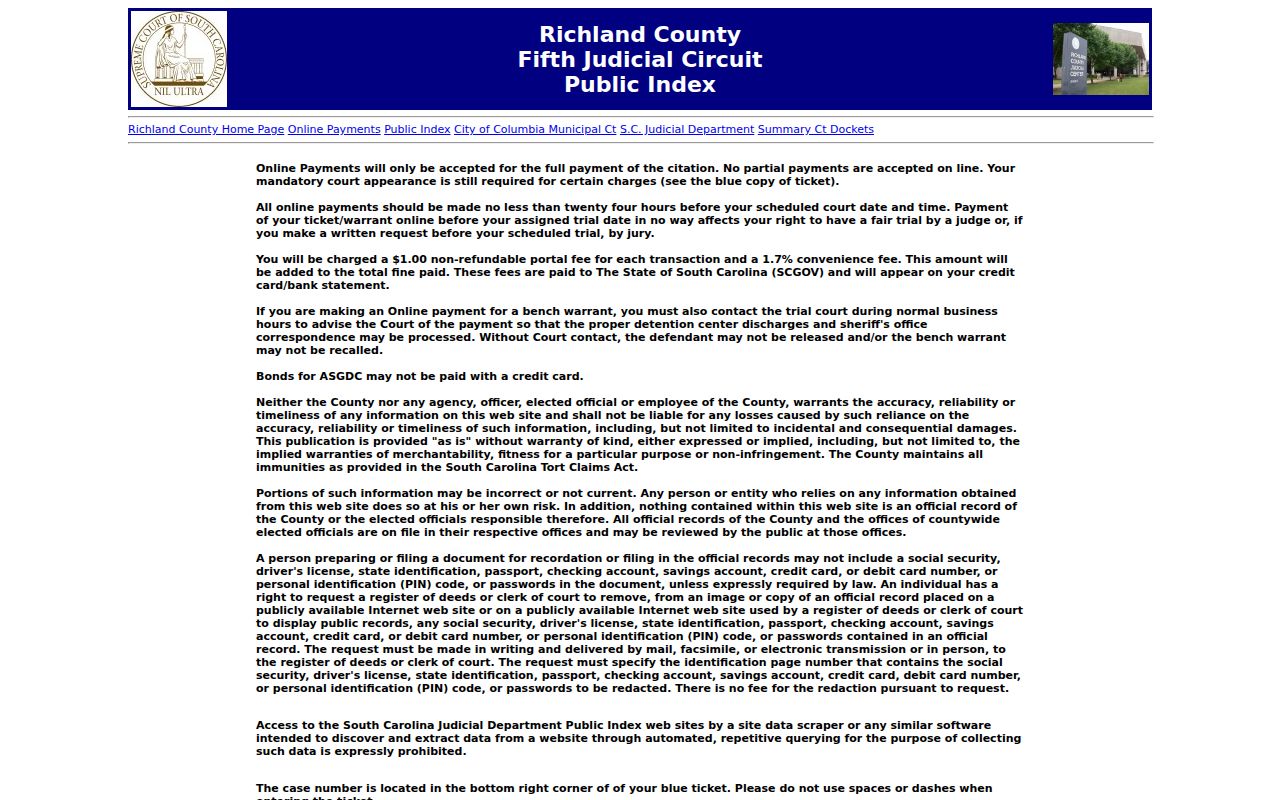
A result can show a case number, party link, court or agency, case type, dates, actions, status, and sometimes a document indicator. It is an index pointer. Take a known case number to the appropriate clerk or court for public-file access and copy rules.
Family, juvenile, adoption, sealed, and expunged materials are not made public merely because an online index exists. A missing web result does not authorize a records request that attempts to bypass a court restriction.
Note: Keep the court, party role, case number, and relevant date together before comparing a public-index result with another record.
St. Andrews Resident Lookup Voter Access
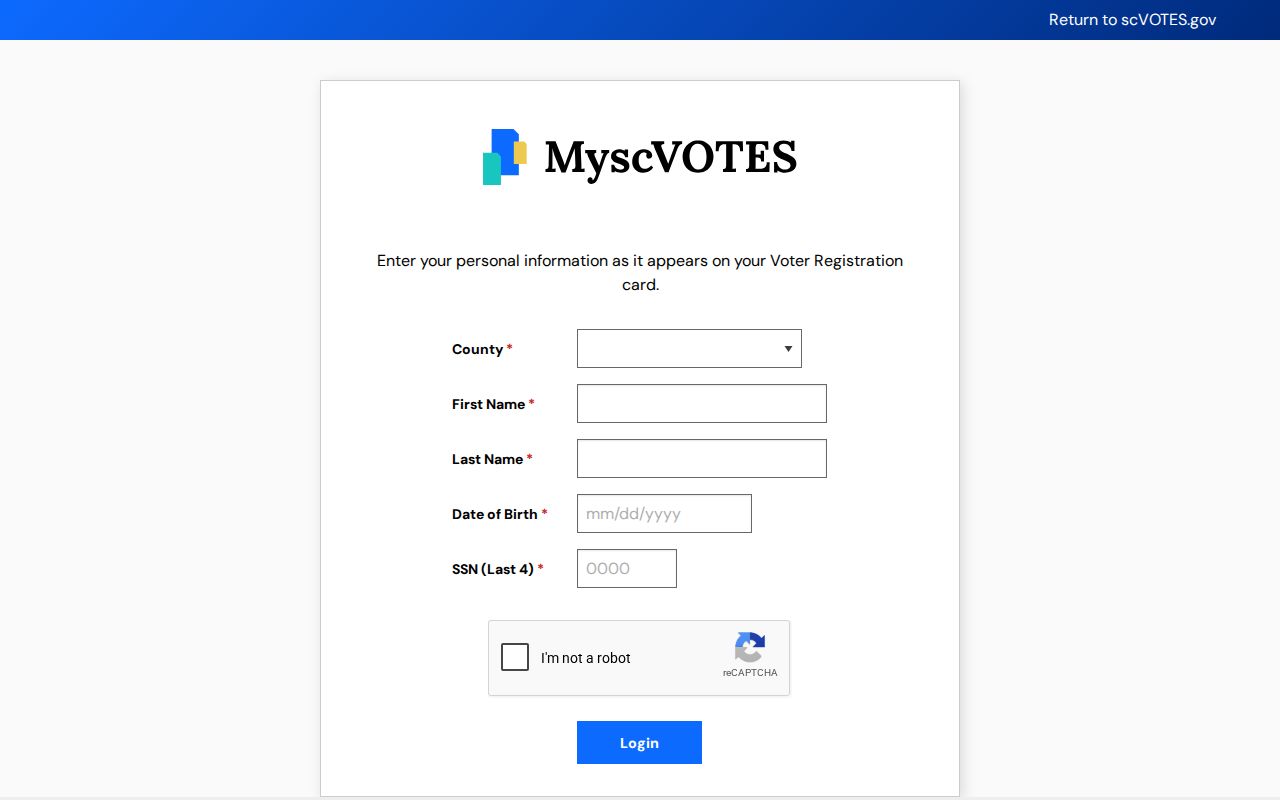
MySCVotes is an identity-verified service for an individual’s own registration information. The sign-in requires Richland County, first name, last name, date of birth in the stated format, and the last four digits of a Social Security number. State guidance describes the information as it appears on the voter-registration record. It is not a find-anyone database and it is not a public street-by-street tool. South Carolina does not register voters by political party.
The MySCVotes voter-information sign-in shows the credentialed route for a personal registration check.
Use the Richland County Board of Voter Registration and Elections for a custodial question, registration forms, or local election information. It is at 300 Columbia Mall Boulevard, Suite 210, Columbia, and lists 803-576-2240.
St. Andrews Resident Lookup Voter Lists
South Carolina’s full voter-list channel is different from MySCVotes. Only a registered South Carolina voter may buy a list. The State Election Commission describes filters including county, voting district, age, sex, race, household, registration date, and election participation. The electronic product can include name, address, race, gender, date of birth, voter number and date, county, precinct, districts, and limited participation history. It does not reveal ballot choices.
The State Election Commission voter-list page documents the formats, purchase rules, fees, and use limits.
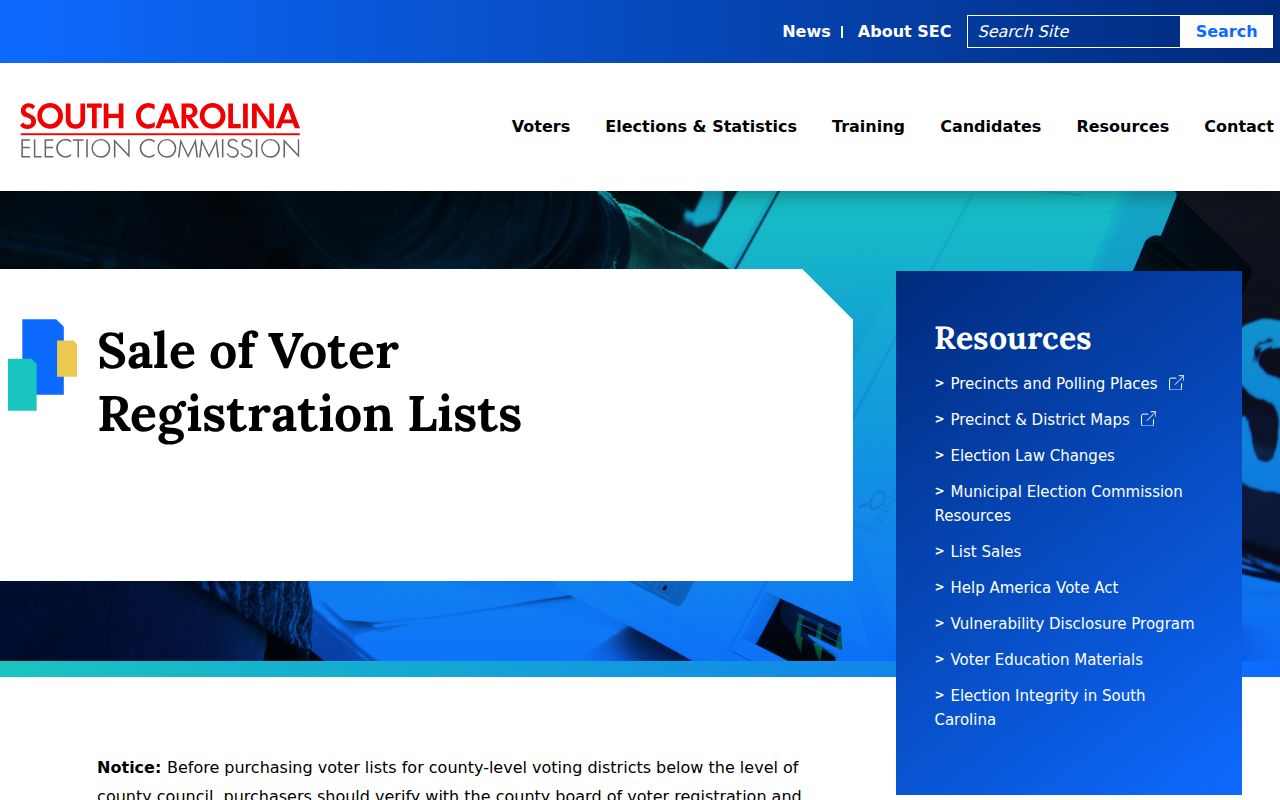
The same state page warns that S.C. Code Ann. § 30-2-50 prohibits obtaining or using public-record personal information for commercial solicitation directed to people in South Carolina. Treat a list product as a controlled state channel, not a general directory of people.
St. Andrews Vital Record Channels
A vital index, a certified copy, and an archive route serve different purposes. South Carolina DPH covers births from January 1, 1915, deaths from January 1, 1915, marriages from July 1950 through December 2023, and divorce reports from July 1962 through December 2023. Birth records become public after 100 years. Death, marriage, and divorce records become public after 50 years under S.C. Code Ann. § 44-63-80. Eligibility rules apply before those periods.
Use the South Carolina DPH vital-records service to choose online, mail, telephone-vendor, or local-office ordering for the record type needed. The Richland County Vital Records office is at 2600 Bull Street in Columbia and lists 803-898-3630. DPH says its $12 search is nonrefundable even when no record is found, so first confirm the county, date, spelling, and whether a fact statement rather than certification meets the need.
For marriage records before July 1950 or after December 2023, use the issuing Probate Court. An actual divorce decree comes from the Clerk of Court in the filing county, not from DPH’s divorce report. DPH death-index files for 1915 through 1967 and SCDAH routes are historical research channels, not substitutes for restricted certified records.
Note: A certified copy has official custody and eligibility rules, while an index is a finding aid that may only point toward the record.
St. Andrews Estate Record Trails
An estate file and a recorded deed can explain a past family property transition without treating an old address as a current location. Richland Estate Inquiry provides a free name search for estates filed after 1983. Earlier files are at Probate Court. Estate files from 1900 through 1982 are on microfilm, while 1983 to present files are scanned for public-computer viewing. Public filings can identify a decedent, estate number, or personal representative in the context of the court record.
The Richland Probate estate-records page gives the court’s access channels. In-person copies are listed at $0.50 per page; mailed requests begin with a $3 search fee and then billed copy cost. The fee-based online route requires the court’s approval or a limited plan under the court’s rules.
For a qualifying family reunion connected with a closed adoption, South Carolina DSS uses a mutual Reunion Registry for qualifying adoptees and specified biological relatives age 21 or older. Both sides must apply and match, with a notarized affidavit. It is not a public name index.
St. Andrews Business Record Roles
A state business filing can confirm a named affiliation when the public record actually displays it. Secretary of State Business Entities Online searches public entity information and can show a registered agent or registered office. Those are business roles and service addresses, not proof of a person’s private location. The Secretary of State also says sole proprietorships and general partnerships do not file there, so an empty search does not rule out a local business connection.
Use the South Carolina Business Entities Online search with the business name and its Begins With, Contains, or Exact Match options. A relevant professional license should be checked through the appropriate LLR board because available fields vary by profession.
Verifying a St. Andrews Resident
A careful resident lookup anchors a name to a dated role before comparing sources. Record full name, middle initial, suffix, earlier documented surname, and the time period. Then choose the source matched to the question. A property owner result belongs with a parcel and transfer date. A court party result belongs with a case role and date. A historical directory entry belongs with its publication year. Two independent custodians are more useful than two copies of the same claim.
- Normalize the name and search exact and variant forms separately. Preserve a middle initial or suffix that one index may show and another may omit.
- Anchor the person to a parcel, court case, estate, or dated historical entry. Save the tax map number, case number, estate number, or publication year exactly.
- Check a second independent source, such as a recorded instrument after a property result or Probate after an estate-linked deed.
- Read the role and date. Grantor, grantee, plaintiff, defendant, personal representative, registered agent, and licensee explain why a name appears.
- Ask the custodian about an unclear index field or an existing record. Offices can explain their own access rules but do not perform open-ended identity research.
- Docket
- A court’s dated list of case actions and events, often reached from a case-number result.
- Index versus image
- An index points to a record; an image is the document copy, which may have a separate access rule or fee.
- Certified copy
- A copy issued by the custodian with official certification, available only through that office’s process.
Note: A second source should add a distinct date, record role, or property connection rather than merely repeat the same name.
St. Andrews FOIA Record Fallback
South Carolina FOIA is a fallback for a specifically described existing non-exempt county record, not a request for a newly created identity report. Richland County asks for a written submission. Under S.C. Code Ann. § 30-4-30, the response determination is due within 10 business days, or 20 business days for records more than 24 months old. If granted, production is due within 30 or 35 calendar days, subject to a lawful deposit and exemptions.
The Richland County FOIA page explains the request route and current fee approach.
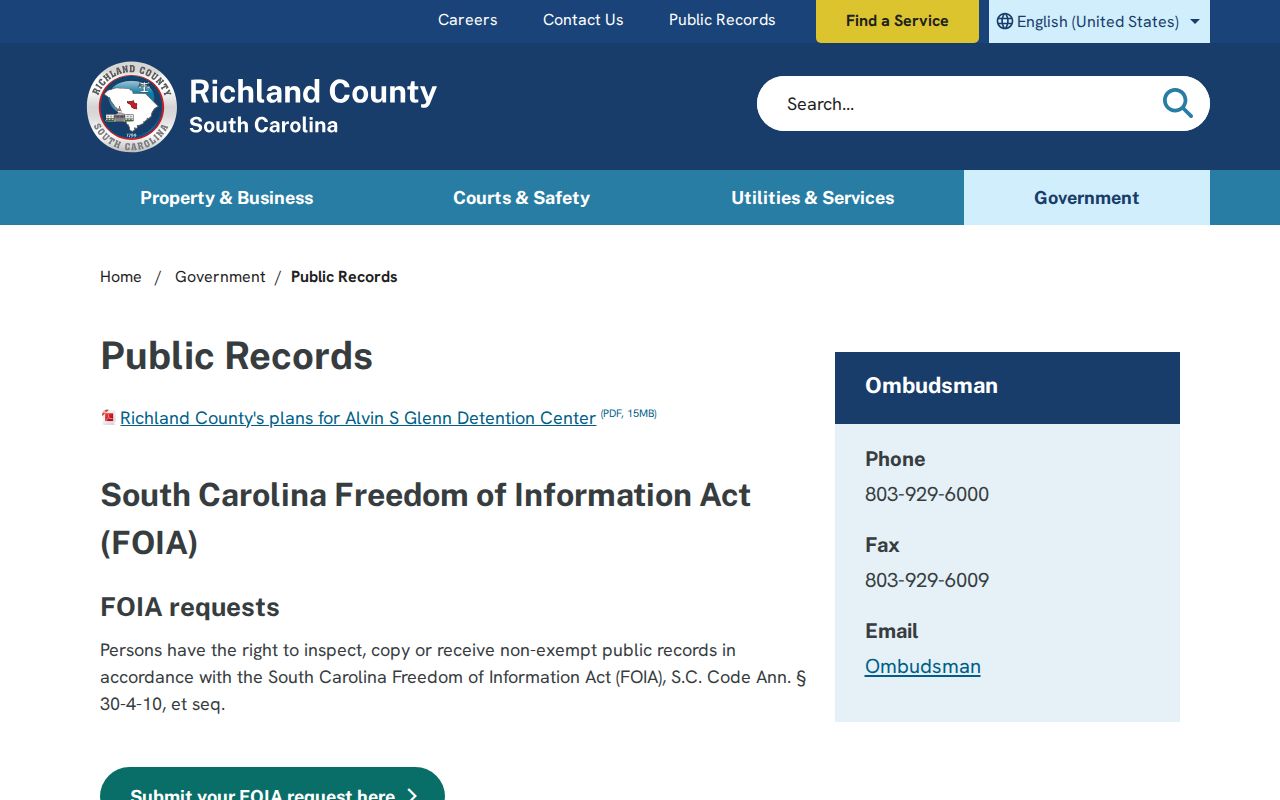
Identify the custodian, record type, date span, and address or person only when necessary. The County may charge the lowest qualified employee’s actual or prorated hourly rate, $25 for off-site retrieval, and a possible deposit. Court-file access follows the court’s rules, not county FOIA.
Note: A narrow request for an identified record is more likely to reach the proper custodian than a request for a broad name report.
Limits of a St. Andrews Resident Lookup
Public records have real boundaries. DMV and utility customer information are not general resident-lookup sources. Sealed or expunged court files, juvenile and adoption material, protected voter information, and restricted vital records may not be available. The South Carolina Address Confidentiality Program gives qualifying participants a designated substitute address that state, county, city agencies and courts must accept. A concealed or suppressed field is not evidence of an error.
When a government record is wrong, contact the custodian that maintains it. A FOIA request does not override a protection or require a custodian to reconstruct concealed data. Commercial people-data products can contain stale or mismatched information; correct the source record first and use the product operator’s own correction route for its separate information.
Lawful use. Use these records for personal, lawful research, family history, estate matters, consumer safety, or civic transparency. Never use a result to stalk, harass, threaten, or harm anyone.